
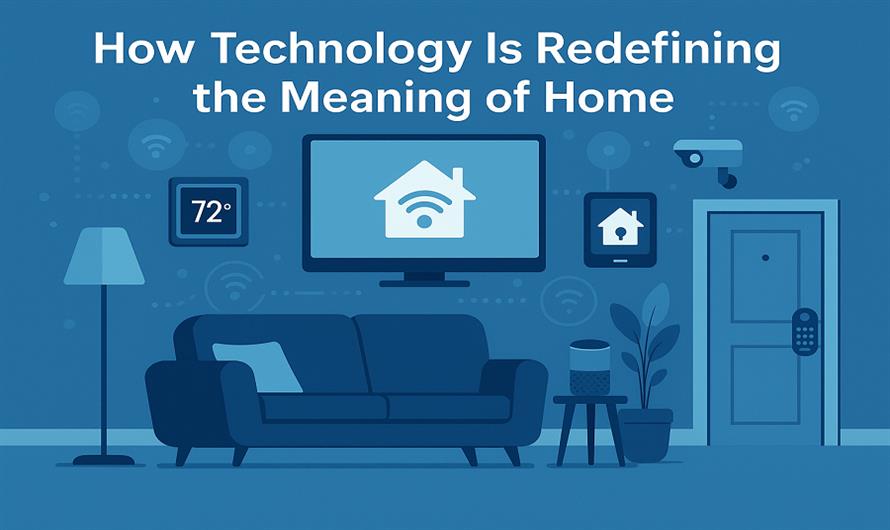
Walk into any contemporary living room and you notice something subtle; home is no longer just a physical space. It has started feeling like some living system-which listens, learns, remembers, and responds. The walls have not changed, the floors have not changed but surely the rhythms inside them have changed.
Technology never barged into our houses. It tiptoed in—first as a smart speaker on the shelf, then a camera at the door, then bulbs we could dim from bed. Now it decides how we work and socialize and feel safe. Somewhere along the way, home changed from being something you get back to…into something that adjusts itself around your life.
The House That Knows You’re Tired
We used to decorate our homes. Now they decorate our routines.
A smart thermostat notices when you have woken up and begins keeping the place warm for your comfort. Lighting systems, fade out at night to pretend a natural sunset pattern is taking place inside your home. Yes, even your fridge can suggest what’s been left over all week-what you should cook!
It is not only a convenience- this is mood management, micro care and the provision of some silent company. They respond to you at levels even people fail to notice most times.
Your home as your mini health hub
Once upon a time, homes protected us from the weather. Today they monitor our wellbeing.
Wearables syncing to bathroom mirrors noting changes in skin. Air purifiers automatically adjust when the pollution outside suddenly increases. Mattresses tracking your sleep cycles as if you were some test athlete, and yes, home radar-based sensors recently fell onto the market—no cameras, no intrusion into private life but aware.
We are moving toward spaces that will softly kneel beside us without being asked for anything in return, almost like a guardian lodged within the architecture.
Work, Play and Everything In Between
The major shift happened when our living rooms became offices. Home was no longer just personal space; it also quickly transformed into the core of productivity.
Video calls and virtual classes, collaborative whiteboards, home-based studios-all forms of technology broke down the weekday and weekend binaries as well as office hour binaries and “I’m in my pajamas but still replying” binaries.
Here’s the tricky part: learning how to switch off when your job is literally 10 feet from your couch.
The good part? Freedom. People working their hours around sunlight, family, pets or simply quiet moments which were never possible before.
Security without the paranoia
Old school home security made it feel like something bad might happen. New systems make it feel more about reassurance than fear.
Doorbell cams sending you clips. Motion sensors that don’t shout unless needed. Smart locks closing themselves because you forgot-again.
Today’s homes feel safer because they are quicker to respond than we ever could be.
No big dramatic alarms. Just calm vigilance.
Community Has Gone Digital Too
Neighborhoods used to form around parks, schools, and the proverbial front porch. Now they form inside apps. Group chats for everything: maintenance alerts, lost pets, noise issues, weekend plans, emergency updates.
In many apartment complexes, residents know each other better digitally than they do in the hallway.
It’s strange… but also kind of warm in its own way.
Cities Leading This Shift
Some cities are being piloted for smart living, where home technology is integrated with municipal services. In a city like Charlotte, it is this fast-growing ecosystem of technological companies pushing that evolution forward-in particular advancements in mobile app development Charlotte wherein platforms amalgamate home devices and local services together with personal features into daily aspects of life.
So… What Does Home Mean Now?
Maybe home used to be defined by walls. Now it’s defined by the ways it supports you.
By the way, it learns your routine.
By the way, reducing your stress is cushioning and making things easier for you.
Home has now become something that shares-quiet, responsive, always available. Not substituting human warmth but enlarging what comfort can mean.
And as long as tech continues to fade out of sight, future home may be the first place we’re fully perceived… understood without ever having to say a word.


Leave Comment